Artist Statement
Why I Chose MUSIC
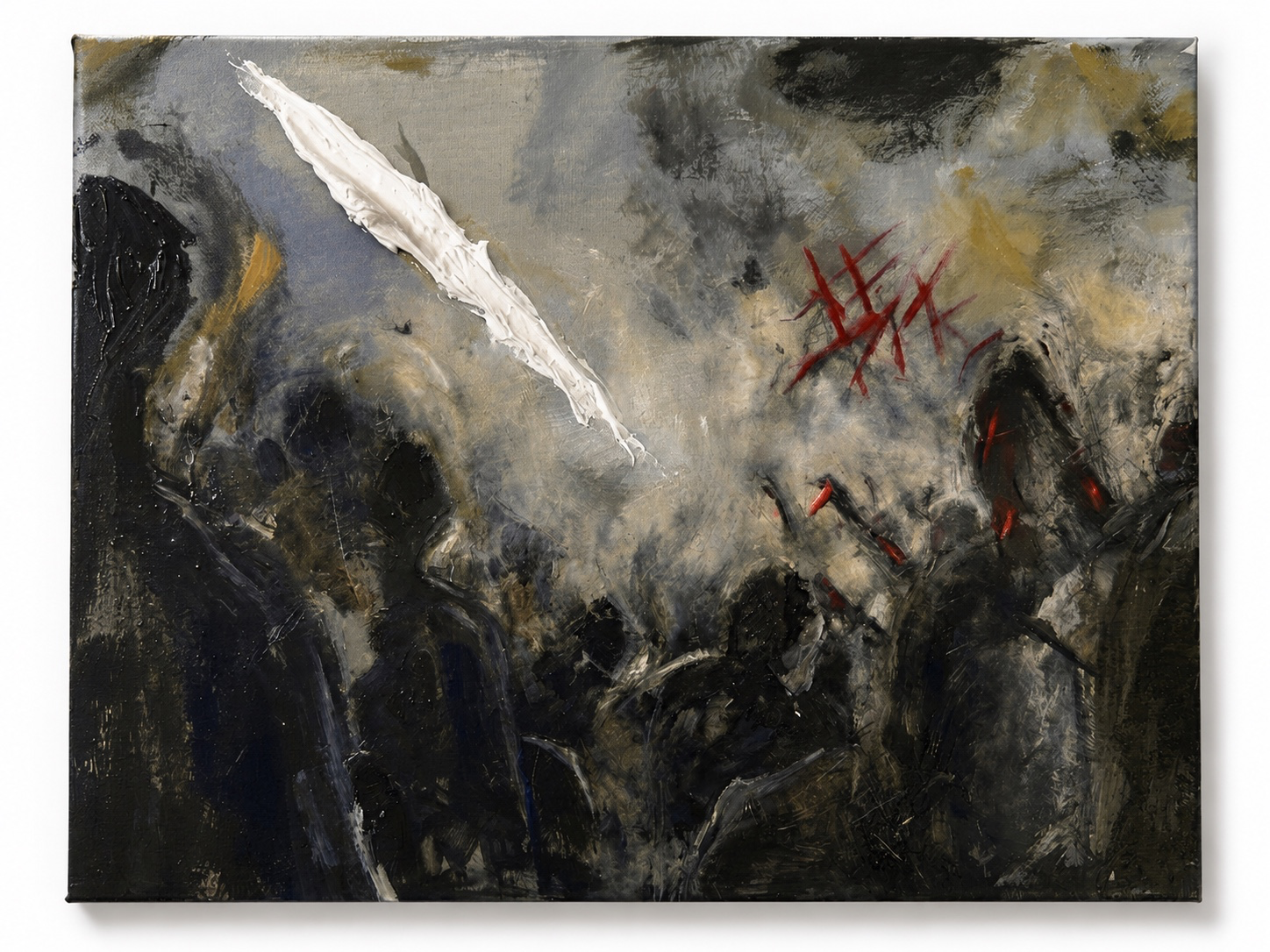
I chose MUSIC as my "signature piece" because it encapsulates the core of my work. First, it comes from a personal experience, a concert, but the piece is less about a stage and more about the feeling of being inside sound . The colour, movement, smoke, lights, and crowded space all press together. It feels exciting, yet overwhelming. I liked especially how this specific moment in my life gave me such a clear opportunity to show energy without making everything neat or fully controlled.
This piece also connects to the broader ideas in my work. Many of my artworks (so far) deal with pressure, attention, and losing a clear sense of self inside an environment. In MUSIC, the environment takes over. The figures, lights, and shapes start blending into one experience. I chose it for this section because it feels open and immediate, while still connecting to my darker and more intense work. It shows how I use colour and movement to turn a real memory into something more emotional, louder, and more personal.
I keep coming back to the same kind of image, even when the materials change. A face lit by a phone screen. An eye sitting inside a dark corner. A crowd staring toward a lens. A rough path cutting across a planned grid. These images feel close to real life, but slightly wrong. They carry the mood of being watched, shaped, distracted, or pushed around by systems people barely question.
Much of my work begins with ordinary objects and situations, because ordinary things can become strange fast. A phone can feel like a tool, a mirror, a habit, or a trap, depending on how it appears in the image. In Always Online, Glow Face, Map of Me, and The Watcher, the screen moves from object to atmosphere. It lights the face, breaks the portrait apart, turns the body into something measured, and then becomes part of a wider pattern of surveillance. I used graphite because it lets small changes in value become psychological. A soft shadow can make a face feel quiet. A hard edge can make it feel pinned down.
Portraiture interests me when it refuses to behave like a normal portrait. I am less drawn to a clean likeness and more drawn to the parts of a person lost, cropped, hidden, or overexposed. In my self portrait work, I left areas unresolved because a finished face can sometimes feel false. I like images where the viewer has to search a little. The missing areas matter. The unfinished marks matter too.
Darkness appears often in my work, but I see it as space instead of emptiness. In Accustomed to the Dark and Nocturne by the Sea, shadow slows the image down. The eye, the moon, the water, and the open dark areas create a kind of quiet pressure. I was thinking about how much an image can hold back and still feel alive. Some work needs silence. Some work needs noise.
The louder pieces push against order in a different way. The Basquiat inspired social piece, MUSIC, More Chaos, Look at Me, and System Underfoot use rough surfaces, found materials, heavy colour, and messy movement. They deal with value, crowds, sound, anger, control, and resistance. I like when an artwork feels slightly unstable, as if it might spill outside its own edges. At the same time, I still care about composition. The chaos has to be shaped. Otherwise it becomes decoration.
Taking a look at my portfolio, I notice my process moving between control and instinct. I plan, measure, crop, erase, layer, and build. Then I let parts of the work stay raw. My strongest pieces usually begin with a feeling I have no clear words for yet, then the material helps me understand it. I am learning to trust discomfort more. It gives the work its edge, and it keeps the image from becoming too easy.
Themes in My Work
Identity and Self-Image
My drawings often explore how a person becomes distorted by attention, comparison, and self-awareness.
Technology and Surveillance
Phones, screens, and watching figures appear throughout my work as symbols of exposure, dependence, and control.
Darkness and Atmosphere
I use shadow, contrast, and limited colour to create tension, uncertainty, and emotional weight.
Control and Chaos
Some pieces are carefully rendered, while others use rougher materials and stronger visual energy. That contrast reflects the push between discipline and disorder.